Die Nasen

Zwei Nasen treffen und beäugen sich. “Was bist du für eine lange Nase…” “Und du erst!” “Du bist ein ganzes Stück länger als ich.” “Aha.” “Ja, so ist das.” “Mmh.” “Was meinst du?” “Ja.” “Ach, so.” “Nein.” Was nein? “Eben.” So eine Nasengeschichte, wer hätte das gedacht…
Ethics
Nowadays you can find ethics as a notion everywhere: ethics in profession, agricultural ethics, medical ethics, applied ethics and so on. You simply can turn everything into an ethical subject. That’s fine since behind that notion lies a promise of a so called “good” action and point of view. Even though part of my final exams at the university consisted in philosophy and theory of science I would never claim to have a sound knowledge of what all is about those many derivations of ethics.
A few weeks ago I was at an evening event where there was dinner served. I had quite a long conversation with a person who is writing her phD in medical ethics. Besides that she had been for some years working in war areas as a “helping hand” in the organization of the humanitarian work. Waw, I thought, what a life. And she told me: yes, her life changed immensely after all that: it is a life based on ethics strictly. There is no day without ethical background. Waw, I thought again. What a “good” life, full of ethics.
For dinner you could chose a vegetarian or normal (meat containing) menu (without declaration of the origins of that meat). The “ethical” person sitting next to me ate with big pleasure the menu containg meat (young goose) and went on talking about medical ethics and her ethical life. After a time she was acting quite rude correcting the speaker of the evening confronitng him with some additional notions fitting that discourse (even though no one of the public had the slightest knowledge nor the idea of these).
After that evening I asked myself the question: do I lead an ethical life? No, I don’t. Of course, I try to avoid eating meat without declaration and try to choose vegetarian food, I try no to buy too much things produced in countries where the working conditions are abusive, I try to avoid taking plastic bags when shopping, and so on. But in the end there are quite an amount of things I do which are not based on proper ethics.
Ethics is far more than only applied to humanitarian or medical work. Our planet including flora and fauna is suffering a great deal from us human beings. Leading a proper ethical life would mean caring for all these things instead of only talking and writing phDs in ethics.
The Art of Building
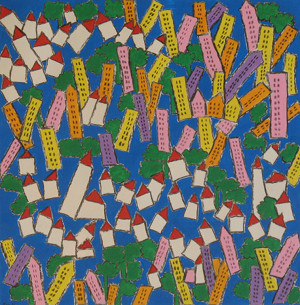
Architecture means a lot of things to different persons. But architecture is more then only following static laws and getting filled the empty space between houses in a already existing village. The big master of modern architecture Mies van der Rohe spoke about architecture as “the art of building”. He meant that only if architecture fulfills all the tasks she has to fulfill you can speak about the real identity of architecture as “the art of building”.
To grasp this idea of architecture being the art of building we can go back to the beginnings of our human race. How did we dwell? How looked our “houses” like? At the beginning caves were our home. We made us comfortable and felt fine inside there protected by the thick wall from nasty weather and enemies. This idea of a cave persists till nowadays when you look around the world: how many people wish to have an own house for them, their family. That is something like a “cave”, a shelter which is protection and identity at the same time.
Aha, and here we are what we expect of architecture nowadays: to be functional and to make identity possible- we want to feel “at home”. But what does a skyscraper with over 30 floors fulfill of that expectations? Well, to understand this complex contemporary situation we just have to look at the local zoos: how can a lion feel at home in a Swiss zoo where the clime and the natural landscape surrounding him are so completely different from those in which he feels at home? The lion’s identity and his personal “cave” lie somewhere in Africa.
We should try to fulfill the “art of building” not only for us human beings but we should let the animals living in their “architectural identity”. Skyscrapers of more then 30 floors and zoos are not representing “the art of building”.
Merry Christmas
A thing of beauty is a joy forever.
Its loveliness increases; it will never
pass into nothingness …
―John Keats
Schneeperlen
Glasklar im Spiegelbild-
obliegt,
wellenhoch,
singst Du-
ein Wiegenlied.
Im Schneeschlummer,
bärengross,
ozeantief,
Dein leichter Schlaf-
in Ewigkeit.
Dream Evolution
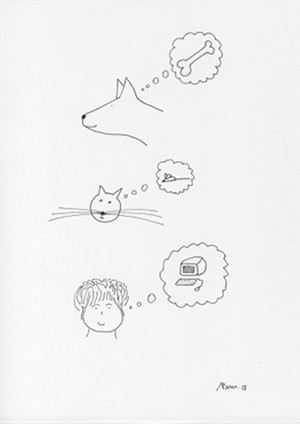
…from organic to synthetic…
The Music of Snow
All of us human beings are very different persons if it comes to our music taste. I love classical music, modern classic and part of the Jazz music. If I am in a special mood I love to hear French chansons or Italian canzoni. And so do other people.
But we do have a common “meeting point” in our listening taste. There is no bigger magic as experiencing a landscape of a freshly snowfall. You have to be on yourself accompanied by your dog only. Best place to listen to this spectacular nature’s music is the forest. You have to stand still and listen. What you hear is: silence and “more”. This “more” is the starting point of a listening school. From there all of us can depart and follow different directions.
The uniqueness of such a “snowy concert hall” is that the music pieces are changing without any possible repetition. It is different but closely connected to John Cage’s Silence. The experience of such a “silence and more” enables us to hear in a next step the nature’s voices and magic concerts. Let’s forget the possibility of speech for those magic moments. Doing so we afterwards can decide to shorten our spoken words to those which have a meaning and lead us to a fertile and more poetic communication.
The Truth About Being a Writer
A book is more than the mere sum of pages. It often is like a relic of a “saint writer” even though the one might still live. It is a believing system and a identification miracle: all of a sudden all kind of very different people can feel and identify themselves with the same protagonist.
But of course, in most of our lives we discover some discrepancies between what has happen and what some people told us about that happening. Reading the new book “La Verité sur l’Affaire Harry Quebert” by the gifted young writer Joel Dicker we all are relieved: what we always believed in is true: the bigger the person and her/ his story the bigger such a discrepancy might be.
There might exist a sound account of famous books, paintings and musical compositions which were not created by the authors we believed they were and that’s fine for us the not famous people, because at the end it was us who created those famous artworks.
“Baaaaaa”, comments the sheep, “I was it!”
The Art of Cooking in Winter
Cooking is like any other artistic procedure: it takes a whole lot of complex thoughts and actions to get it the best possible way. It is poetry and color adaption, philosophy and culture, it is about passion and being a taste lover.
To change the language: now in German:
Wenn die Butter mit dem Olivenöl in der Gusspfanne schmilzt, der Schnittlauch in seinem Grün das Auge besticht, der Duft nach Zwiebeln und Knoblauch in der Luft liegt und die frischen Steinpilze in Reih und Glied auf ihr heisses Ölbad warten, dann liegt Magie in der Luft. Es ist Winter und der Nüsslisalat wird von ebendiesen Köstlichkeiten gekrönt. Die Pilzsymphonie zerschmilzt auf der Zuge, der Gaumen dankt, das Auge träumt: eine gelungene Vorspeise.
Bon appetit!